LOSING FRIENDS AND FINDING PEACE
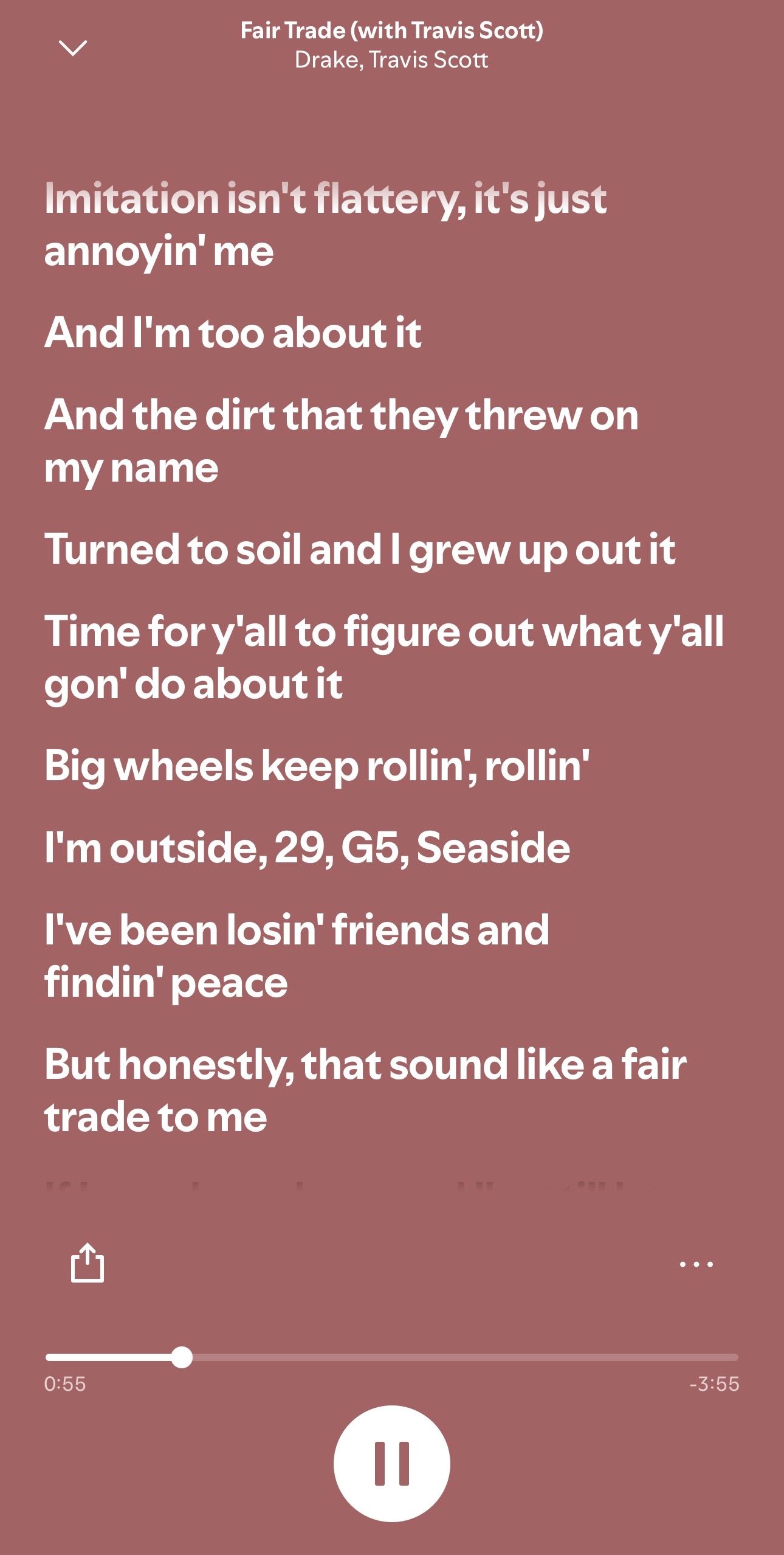
I heard “Fair Trade” by Drake on shuffle this morning, and it’s a song I’ve listened to a million times, but today one part hit a little different: losing friends and finding peace.
And I thought… huh. Yeah.
We should probably talk about that.
Because there are some things I’ve learned over the last year about people, relationships, access, boundaries, karma, projection, and myself that I don’t really talk about publicly.
Not because I’m scared to talk about them. I think we have established by now that being quiet has never exactly been my spiritual gift.
But because I’ve wanted to make sure I could talk about them from a place of reflection instead of reaction.
And this isn’t just about friendships. I mean relationships in the broadest sense: friendships, romantic relationships, professional relationships, family relationships, coworkers, clients, acquaintances, people you used to know, people who were incredibly important for one chapter of your life, and people who somehow think knowing you ten years ago gives them lifetime access to the current version of you. All of it.
And yes, I know there are probably going to be a few people who read this and immediately wonder, “Wait… is she talking about me?”
Maybe. Maybe not. Probably.
Honestly, if you have to stop and think about it for a minute, that might be information worth sitting with.
But I’m not writing this to secretly call somebody out.
The shoe could fit several situations from different seasons of my life, including situations where I was the one who needed to learn something.
Because I believe in karma, but probably not in the way people usually talk about karma.
I don’t believe the universe is sitting up there with a naughty-and-nice list going, “Ope, Katelyn was good today, send her $20.”
And I don’t believe that if you’re a good person, only good things will happen to you, or that every person who does something hurtful will immediately have something bad happen to them.
If life worked like that, we wouldn’t spend so much time asking, “Why do bad things happen to good people?” or “How could God let that happen?”
And we all know someone who seems to move through life acting without integrity and somehow keeps getting away with it.
I don’t pretend to understand all of that.
Being a medium does not mean I have every answer to life, and to be honest, I’m not even interested in having all those answers.
I will never put myself on some spiritual pedestal and pretend that I do. Believe me, I have a past. I have “sins.” I have made mistakes. There are probably people who knew high school Katelyn or early-twenties Katelyn who could happily give you some stories.
And if somebody wants to dig one up, please do, and we can talk about it, because I probably already went to therapy about it and paid to talk about it.
For a long time, I carried a lot of shame about different versions of myself. One of the most beautiful things about getting into my thirties has been realizing that I genuinely don’t have time for shame anymore. And thank goodness, because it took long enough.
I can take accountability for something I did without deciding I have to hate myself for having done it. I can regret hurting someone without regretting every choice that eventually helped make me who I am. I can say, “Yep, I was wrong.” I can apologize when an apology is owed. I can learn. I can change. And then I can keep moving.
For most of my life, though, I thought being a good person meant being the bigger person. Forgive them. Pray for them. Walk away. Don’t react. Don’t make anyone uncomfortable.
Being raised Catholic definitely added another layer of “be good, forgive, turn the other cheek.” Somewhere along the way, being the bigger person occasionally turned into being a doormat with really good manners—who got hurt... a lot.
I would overgive. I would overexplain. I would make excuses for people. I would try so hard to understand their perspective that eventually I had explained their behavior to myself. And sometimes I would somehow end up apologizing to the person who hurt me because I was so uncomfortable with the idea of someone thinking I wasn’t nice.
Something that has helped me tremendously is understanding projection.
In psychology, projection is essentially when someone unconsciously attributes feelings, thoughts, impulses, or qualities within themselves to another person. Understanding that changed something for me because I realized I don’t have to accept every single thing somebody believes about me as truth.
Sometimes people want you to carry feelings they don’t know how to sit with themselves.
Read that again.
Sometimes people want you to carry feelings they don’t know how to sit with themselves.
Sometimes if they can convince you that you’re the problem, you’ll stay busy questioning yourself instead of looking at what actually happened.
And if you’re someone who already tends to overthink, overgive, self-reflect, and wonder if maybe you could have done something differently... that can become quite the little cycle.
But that doesn’t mean every criticism of me is projection either.
Sometimes I’m wrong.
Sometimes somebody calls me out and I need to sit down, listen, apologize, and do better.
Authenticity also requires accountability.
I say “I don’t know” all the time. I say it in sessions too. I’ll tell someone, “I don’t know that 100%, but this is what I’m getting.”
I will never pretend certainty just because I’m a medium.
I think we should take pretty much everything and everyone with a grain of salt. Including me.
But I’ve also learned that somebody being angry with me doesn’t automatically mean I did something wrong. Someone being disappointed by my boundary doesn’t mean my boundary is wrong. And someone deciding I’m mean or cold because they didn’t like what I said doesn’t automatically mean I was mean or cold.
I had this happen in a friendship where someone asked for my opinion about a change she was making with her business. And I actually stopped before answering and asked her to clarify, “Do you actually want my opinion, or do you just want me to listen and support you?”
Because those are two very different things, and I’m perfectly capable of doing either.
She told me she wanted my opinion, so I gave it to her.
And she didn’t like my opinion.
The thing was, I had already been honest about how I felt. I didn’t agree with the change, I didn’t like the name, and I had told her that. So when she asked me again for my honest feedback, I wasn’t going to suddenly tell her I loved it because that would have been easier for both of us.
I told her the truth, and I also told her, essentially, “But it’s your life and your business. I don’t have to like it. If you love it and it feels authentic to you, then do it.”
That conversation eventually turned into me being called mean and cold-hearted, being told I wasn’t supportive, and that I wasn’t being a good friend.
And I remember basically saying, “You know what? I can understand why you think I’m being mean and cold-hearted. But I’m not trying to be. You asked me for the truth, and I gave you the truth.”
I didn’t yell. I didn’t call her names. I didn’t try to tear down her business. I just wasn’t willing to tell her something I didn’t believe because it would make the conversation more comfortable.
And obviously, that is one tiny piece of an entire friendship. She has her experience of that relationship, I have mine, and there’s a whole lot more to any friendship ending than one conversation.
I’m not telling this story to prove I was right and she was wrong.
That’s actually not the point at all.
The point is what I noticed in myself.
A few years ago, being called mean and cold-hearted would have absolutely sent me into defense mode.
“Your Honor, please see Exhibits A through Z proving I am actually a good person.”
Or worse, I probably would have started backtracking. Maybe I was too harsh. Maybe I should take it back. Maybe I should just tell her I like it. Maybe I should say whatever makes this okay again.
And I don’t want to do that anymore.
Because then I’m not being authentic either.
If you ask me to support you, I can support you. If you ask me to listen, I can listen. If you ask me for my honest opinion, I’m going to try to give it honestly and with kindness.
That doesn’t mean my opinion is automatically right. It doesn’t mean you have to take my advice. It doesn’t even mean you have to like what I say.
Your life is still yours. Your choices are still yours.
But I don’t think being a good friend means telling somebody what they want to hear so they never have to feel uncomfortable with me.
And I don’t think being authentic means I need everybody to agree with me either.
That experience taught me that I can let somebody be mad at me. I can let somebody think I was mean. I can even stop and genuinely ask myself, “Was I? Is there something here that I need to own?”
And if there is, I want to own it.
But if I look at myself honestly and know that I spoke my truth without intentionally trying to hurt somebody, I don’t have to rewrite that truth just to make myself easier for someone else to love.
I can let somebody think I’m mean. I can let somebody misunderstand me. I can let somebody tell their version of the story without immediately feeling like I need to run around correcting it.
And I can be angry too.
Because anger isn’t always this horrible emotion we need to get rid of. Anger can be information. Sometimes anger is your entire system saying, “No. Absolutely not. That crossed a line.”
There’s a difference between living in anger and allowing anger to tell you something important.
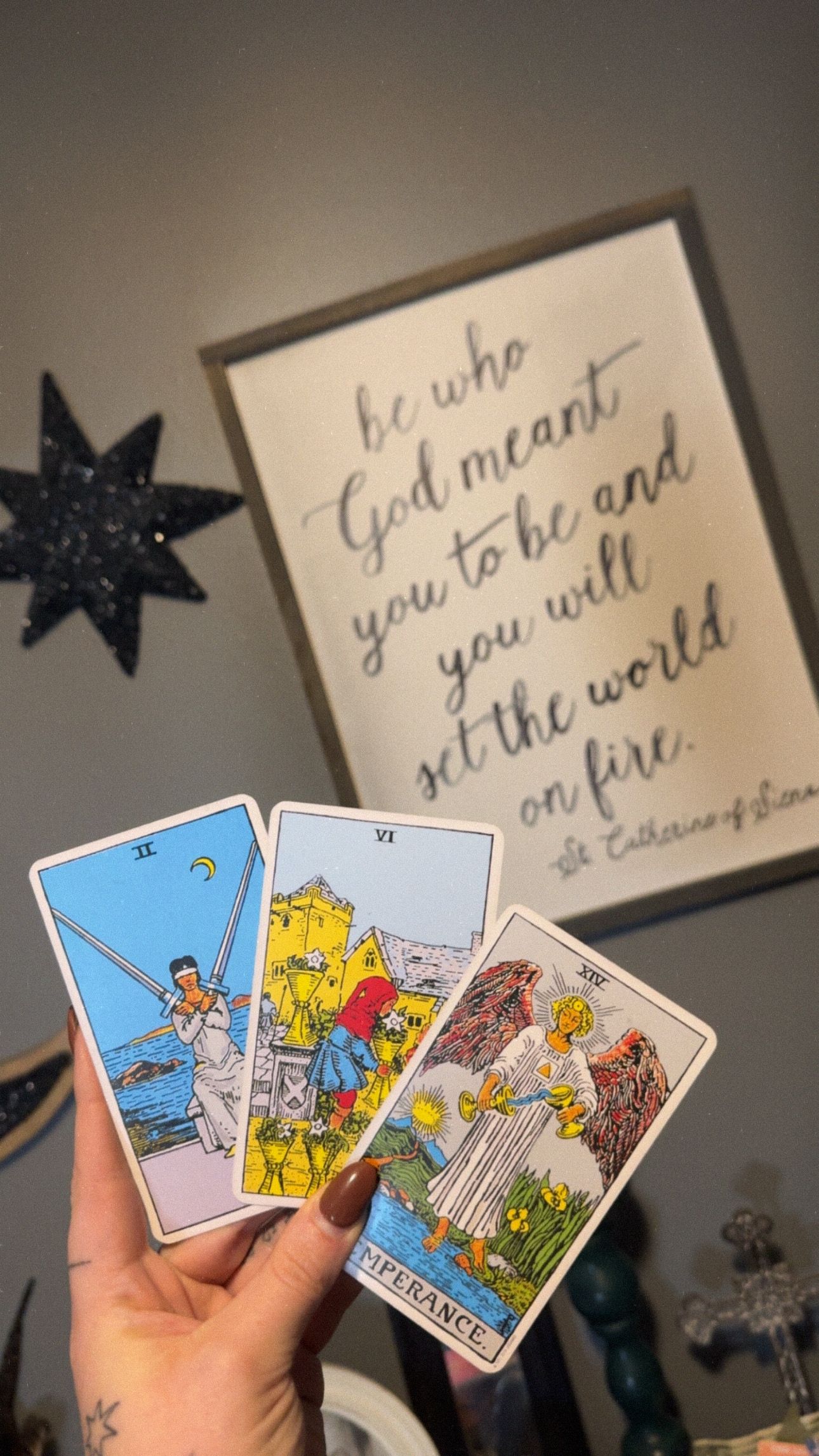
So this morning I actually pulled tarot cards around a particular relationship—different than that friendship, but still applicable all around.
I didn’t ask, “Should I keep this person in my life?” because I don’t think tarot, a psychic, a medium, a therapist, a friend, a family member, or anyone else should make that decision for me.
People come to me all the time asking, “Should I stay in this relationship? Should I leave this job? Can I trust this friend? Is this person lying? Should I keep working with them?”
And I usually bring it back to a different question:
Do you trust yourself?
Because you’re never going to be able to guarantee that another human being won’t disappoint you, lie to you, change, hurt you, betray you, misunderstand you, or simply become someone who no longer fits your life.
So do you trust yourself to leave when you know you should? Do you trust yourself to say, “No, that was not okay”? Do you trust yourself to tell somebody they hurt your feelings? Do you trust yourself to change your mind about a relationship?
Do you trust yourself enough to let somebody misunderstand you without abandoning yourself trying to change their opinion?
That’s actually how I use tarot.
I use it as a tool to understand myself.
What is this relationship showing me? What is this person mirroring back to me? What am I projecting onto them? What are they triggering in me? What lesson keeps repeating here? What am I not seeing clearly?
Because one of the biggest misconceptions about tarot is that its purpose is predicting the future.
To me, tarot and being psychic isn’t about telling or predicting the future.
It’s about telling the truth.
The cards I pulled this morning were the Two of Swords, Temperance, and the Six of Cups reversed. And what I took from them wasn’t some dramatic message from Spirit telling me exactly what to do.
It felt much more like an invitation to stop sitting in indecision, come back into my own balance, and recognize that something from the past doesn’t necessarily belong in my present simply because there is history there.
Sometimes the lesson isn’t figuring out how to repair something.
Sometimes the lesson is realizing you’re allowed to leave it where it is.
Because people and relationships can be seasonal. We grow up. We have children. Careers change. Priorities change. Values change. Life gets insanely busy.
Lord knows mine is. Even when I’m not sitting in a session, I’m balancing being a mom, running a business, family, friendships, my own healing, and approximately seventeen different realms at any given moment.
Sometimes nobody did anything horrible. Sometimes people simply grow apart. Sometimes the professional relationship has run its course. Sometimes the friendship doesn’t fit anymore. Sometimes two people who genuinely loved each other aren’t supposed to be romantic partners anymore. Sometimes someone was exactly who you needed during one chapter and isn’t supposed to come into the next one.
And that doesn’t automatically make either person bad.
But sometimes there is a lesson.
Sometimes I can look back at a relationship and realize I was giving significantly more than I was receiving. Sometimes I realize someone liked having access to what I could do for them more than they actually knew me.
Sometimes someone likes being able to say they know me or that we’re friends, and I’m sitting there thinking, “I’m not entirely sure you actually know me at all.”
Having the gifts and career that I have has made discernment around that especially important.
People ask my friends and family all the time whether they just get free readings constantly or whether I’m always telling them things. Yes and no. This is who I am.
There isn’t a switch where suddenly I’m “Psychic Katelyn” and then I clock out and become regular Katelyn.
Believe me, my family has lovingly been telling me to be quiet since childhood.
Look at my old report cards: great student, talks too much. I’m the youngest of three. Finding and using my voice has basically been a lifelong assignment.
But my gifts aren’t a party trick.
I take my work incredibly seriously. I’m not going to walk into a party, point at somebody, and announce that their dead grandma says hi.
And friendship with me does not automatically mean unlimited access to my energy or my work.
“Can you just pull one card?”
“Do you have five minutes?”
“Can you just tell me what you get?”
Sometimes the answer is no.
This is my actual job. It is also my energy, my time, and something I deeply respect.
And that has forced me to look at something I know is one of my own lessons in this lifetime: overgiving.
I have a huge heart, and I love that about myself. I don’t want life to make me hard. But having a huge heart without discernment can also make you naive.
It can keep you in friendships, romantic relationships, professional relationships, jobs, family dynamics, and situations much longer than you belong there.
My lesson isn’t becoming less loving.
It’s learning that having a big heart doesn’t mean everyone gets unlimited access to it.
And that brings me back to karma.
I don’t think my job is to get even with somebody who hurt me. I don’t need to expose them, embarrass them, retaliate, or sit around waiting for something bad to happen to them.
I can pray for someone and still not want them in my life.
I can genuinely hope they heal and still recognize that I am not required to be present for the healing.
I can forgive somebody without reopening the door.
I also believe that what is done in the dark eventually has a way of coming into the light.
Maybe I know somebody is lying to me immediately. Maybe I don’t. People ask me that too: “But you’re psychic. Don’t you just know?”
Yes and no.
I’m still human.
I don’t need to obsessively investigate every person around me because I trust that truth has a way of revealing itself.
More importantly, I’m learning to trust myself to respond when it does.
And sometimes karma isn’t some giant cosmic punishment.
Sometimes karma is simply consequence.
Sometimes the natural consequence of how you treated someone is that you don’t get access to them anymore.
Sometimes someone’s karma is losing you.
Not because you’re better than them. Not because you’re perfect. Not because you’re standing on some spiritual pedestal waiting for God or the universe to punish somebody.
Simply because relationships have consequences.
If somebody repeatedly crosses your boundaries, uses you, disrespects you, takes without reciprocating, or refuses to learn the lesson the relationship keeps presenting, you are allowed to stop volunteering yourself as the classroom.
And that one took me a while.
It doesn’t mean I hate you. It doesn’t mean I wish anything bad on you. It doesn’t mean I have to dramatically avoid aisle seven if I see you at Walmart.
We live in Iowa. We’re probably going to run into each other eventually.
I can smile. I can say hi. I can sincerely wish you well. I can remember beautiful things about a relationship and still know that I don’t want it back.
There are people I miss who I don’t need back. There are people I love who I don’t need access to. There are people who probably miss me and don’t understand why I don’t reach out anymore.
There may be people who read this and don’t like it.
And I’m finally learning to be okay with that.
Because I’m in a season of asking different questions.
Who actually brings me peace? Who takes care of me too? Who loves me instead of only loving what I can give them? Who cares about my daughter and my family? Who shares the values that matter to me? Who can hear “no” without punishing me for it? Who can tell me when I’m wrong without trying to shame me? Who can grow alongside me instead of requiring me to remain an older version of myself so the relationship can stay comfortable?
And maybe most importantly:
Who gets access to me?
That question has become really important.
Because my standards aren’t about controlling how other people behave. They’re about deciding what I’m willing to participate in.
I cannot control whether somebody lies, projects, gossips, takes advantage, misunderstands me, or tells a completely different version of a story.
I can control whether I keep giving them a front-row seat in my life.
And maybe that’s the part of karma I understand differently now.
I don’t have to deliver it.
I don’t have to get even.
I don’t have to make somebody understand what they did.
I don’t have to keep proving I’m a good person.
I don’t have to keep returning to a relationship just because there was once love there.
I can let God, the universe, life, time, and that person’s own choices handle whatever lessons belong to them.
My responsibility is mine.
So when “Fair Trade” came through my shuffle this morning, I understood that line a little differently.
There have been people I’ve lost in the last year. There have been relationships I’ve outgrown. There are people who no longer have the same access to me they once did. There are probably more changes coming as I continue learning discernment and stop overgiving.
But I’m also finding peace.
I don’t need revenge. I don’t need everyone to understand me. I don’t need everybody to agree with my version of a story. I don’t even need everybody to like me.
I need to know that I can trust myself.
And if losing some people, relationships, or access along the way is part of finding that kind of peace?
I think that’s a fair trade.
Katelyn
Soulful Expressions
